The Quiet Pint Index: Decoding a Landlord’s Body Language Mid-Riff
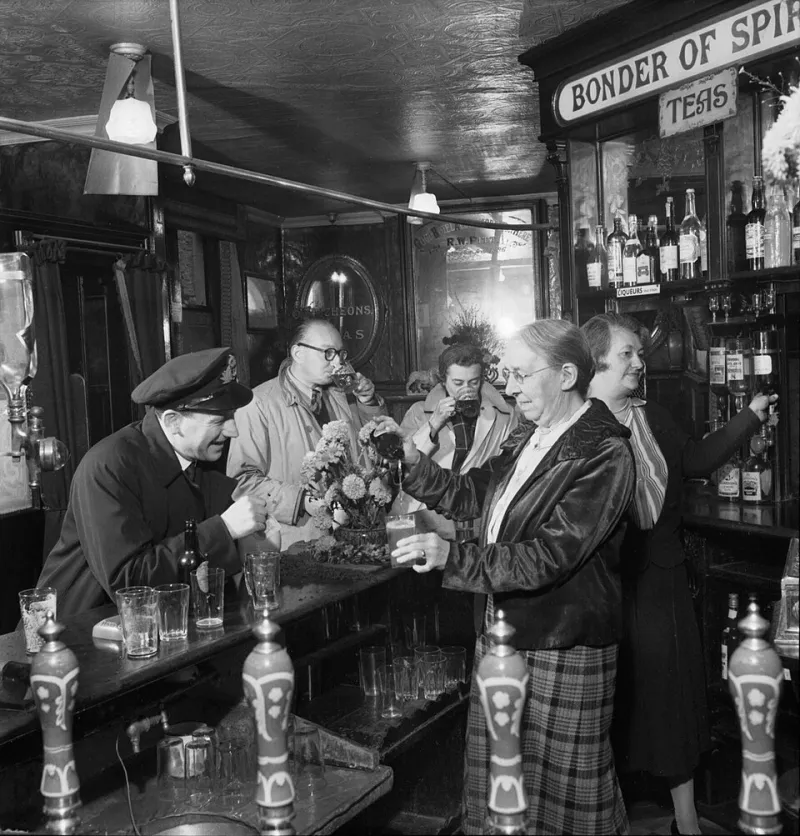
Photo: Ministry of Information Photo Division Photographer, Public domain, via Wikimedia Commons
Every pub gig has two audiences. One is singing along at the front, holding a pint like a team mascot. The other is behind the bar, holding a tea towel like a referee’s whistle. The landlord rarely heckles. They semaphore. And if you can read the signs, you can save the night, the fee and the return booking — without ever having to admit that your 11-minute guitar solo was a mistake.
Why the Bar Is the Real Front Row
Staff are the sound limiters with legs. Regulars are the weathervanes. The trick is not paranoia; it’s pattern recognition. A pub can be loud, packed and joyful right up until the moment it isn’t. The shift is usually visible before it is audible: a glance at the clock, a change in glass-collection speed, a landlord who suddenly looks like a man reviewing his car insurance.
Freddie & The Freeloaders have played enough back rooms to know that the bar is the first place to check when the applause starts feeling polite. So here’s a mid-set crash course in reading the room without stopping the song.
The Folded Arms at the Pumps
Arms crossed behind the bar can mean three things: the landlord is cold, the landlord is listening, or the landlord is calculating how much the carpet cleaning will cost. Context is everything. Folded arms plus a gentle head-nod during a chorus? That’s a man enjoying himself in the only way a landlord knows how. Folded arms plus a stare at the ceiling every time the snare hits? That’s a request for one less decibel and one more cymbal control.
Do not panic. Tighten the banter, keep the next song mid-tempo, and resist the urge to introduce the band for four minutes. The folded arms are not a red card. They are a yellow card with a pint glass on it.
The Towel Over the Tap
The tea towel draped over a handpull is the pub equivalent of a lighthouse. It says: service needed, volume noted, or both. Sometimes it’s just a landlord drying a glass. But if the towel stays there during your loudest number, and the landlord is looking directly at the drum kit, treat it as a signal to drop a gear. Not every gig needs to end with feedback and a broken snare head. Some gigs need a clean twelve-bar and a landlord who can hear the till.
The Sudden Glass Collection
When a bar back materialises with a washing-up bowl during your guitar break, that is not a compliment about your energy. It is a safety briefing. Glasses are at risk, and the staff are clearing the runway. The correct response is to slow the set down slightly, thank the glass collectors by name if you know them, and avoid any song that encourages audience members to form a pit near the fruit machine.
A quick line like ‘We’ll keep it tidy for the bar staff’ goes a long way. It also buys you goodwill for the next time you accidentally knock over a mic stand.
The Till Drawer Slam
The till drawer slam is a complex signal. It can mean the pub is taking good money, which is excellent. It can also mean the queue is three deep and your between-song story about the van’s clutch is costing the landlord a round of drinks. If the till slams and a member of staff looks at the stage with the expression of a disappointed maths teacher, cut the chat and hit the next song.
The Mop Cameo
A mop appearing mid-set is never a good omen. It could be a spilled pint, a leaky ceiling, or a punter who has misunderstood the concept of a mosh pit. Do not mock the mop. Do not ask if the landlord is expecting a flood. Acknowledge the situation, slow the tempo, and keep the show moving. The mop is not a critic. It is a cleaning implement with a sense of timing.
The Regulars’ Weathervane
The old boys at the end of the bar are the canary in the coal mine. If they turn their stools away, you have approximately one song to win them back. If they stand up and go outside with their pints, do not play a ten-minute encore. The regulars have spoken, and they have said ‘we would rather stand in the car park’.
The Light Flicker
A landlord flicking the lights at 10:45 is the pub equivalent of a red card. It is not a request for an encore. It is a reminder that last orders have a timetable. A false ending and a cheerful exit will always beat a stubborn final song that nobody wants. Thank the room, thank the bar, and get your guitar case out before the lights go full fluorescent.
The Signal-to-Setlist Cheat Sheet
| Signal | Likely meaning | Setlist move |
|---|---|---|
| Folded arms, eyes on stage | Attentive or unimpressed | Hold gear, tighten banter |
| Towel over the tap | Service needed or volume concern | Drop to mid-tempo, cut distortion |
| Sudden glass collection | Safety and clearance | Switch to a slower song, thank staff |
| Till drawer slam | Queue frustration | Cut chat, start the next song |
| Bar staff speeding up | Good night or panic | Check faces: smiles mean keep, frowns mean wrap |
| Regulars turn away | Room losing interest | Play the hit, then plan the exit |
| Lights flicker | Last orders | Announce the final song, no fake encore |
| Mop appears | Cleanup required | Acknowledge, slow down, do not take the mick |
| Landlord checks watch | Time pressure | Finish within two songs |
The False Ending: A Gentleman’s Exit
A false ending is not a defeat. It is stagecraft. Finish the song, thank the room, and leave them wanting one more rather than wishing you had stopped three songs ago. If the signals are stacking up — towel, till, mop, lights — call it early and call it warmly. The return booking is the real encore.
Last Orders on the Semaphore
Pub gigs are a partnership between the band, the bar and the people holding the pints. The landlord may never tell you that the room is turning, but the towel will. Learn the signals, respect the staff, and keep the show rowdy without turning the public bar into a incident report. That’s how you get invited back — and how you get a quiet pint at the end of the night without having to explain yourself.