Stairs, Cellars and the Backstage Kettle: The Load-In Events That Sort Road Dogs From Weekend Warriors

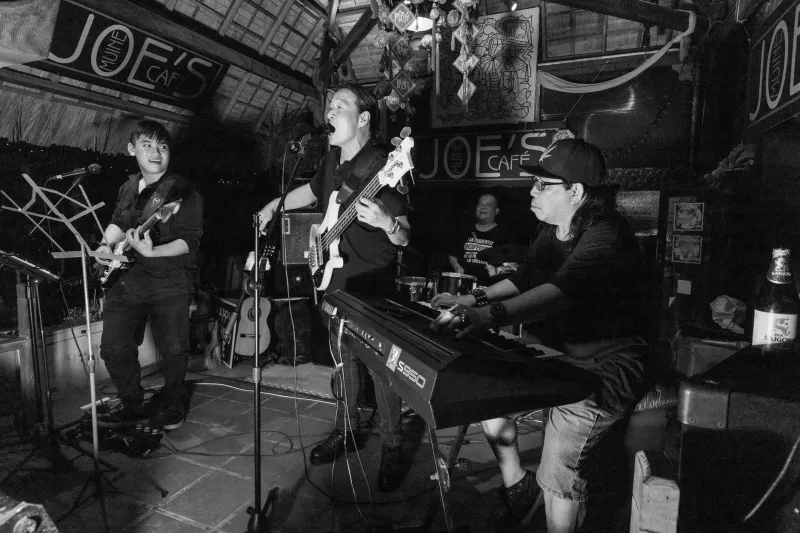
Photo: Jimmy Baikovicius from Montevideo, Uruguay, CC BY-SA 2.0, via Wikimedia Commons
There is a moment before every gig when the band is not a band. It is a group of people carrying a bass amp up a staircase that was clearly designed for a single confused pigeon. The posters say doors at seven. The van says otherwise.
Welcome to the load-in: the least glamorous sport in British music. It has no applause, no rider and a scoring system known only to venue staff and the person holding the trolley. Here are six events that separate road dogs from weekend warriors. Fans, read on. This is why the support band sometimes sound-checks in a corridor while you are still in the pub.
Event One: The Narrow Staircase Sprint
Every town has a venue upstairs. Every upstairs venue has a staircase that turns at least twice, narrows without warning and has a handrail that wobbles like a nervous trombonist. The staircase sprint is a test of grip, geometry and whether your amp fits around the corner or needs to be rotated like a safe in a heist film.
Band tip: Walk the route before you carry anything heavy. Measure the tightest turn with your eyes, not your shins. Carry the lightest thing first to learn the rhythm, then go back for the kick drum. If the staircase has a carpet, assume it is older than the band and twice as tired. Wear shoes with grip. Flip-flops are not load-in footwear, however strong your commitment to the bit.
Fan takeaway: If the doors are five minutes late, someone is probably wedged between a monitor wedge and a radiator. Be kind. They wanted the first riff as much as you did.
Event Two: The Cellar Hatch Limbo
Cellar venues are brilliant. Low ceilings, sweaty walls, a stage that is basically a rug with ambitions. They also tend to have a hatch. The hatch is the venue's way of asking whether your band can communicate without words while lowering a guitar case at an angle that defies physics.
Band tip: Two people on the hatch, one person below, one person outside doing traffic control. Do not all try to help at once. This is not a team-building exercise; it is a fire drill with cymbals. Lower cases flat where possible. Keep cables in a separate bag so you are not fishing a jack lead out of a cellar while the headline act is already doing a line check. And label your gear. A cellar hatch has a mysterious appetite for black instrument cases.
Fan takeaway: The support band may have carried their entire backline down a ladder. They have earned your attention.
Event Three: The Double-Parked Van Dash
There are two types of UK load-in: the one with a designated bay, and the one where the van is double-parked outside a kebab shop with the hazards on and the drummer watching for wardens. The double-parked van dash is a timed event. It rewards planning and punishes the person who says, casually, that they will bring the heavy stuff in on the second trip.
Band tip: Unload in order of need: drums, amps, guitars, merch, then the box of cables that no one remembers packing. One person stays with the van. One person stays with the gear inside. Everyone else carries something. Do not stop for a chat with the sound engineer until the van is legally parked or at least convincingly abandoned. If the venue says there is a loading bay, believe them, then check whether it is blocked by a delivery of crisps.
Fan takeaway: That late start might not be the band's fault. It might be a white van, a traffic warden and a very narrow one-way system.
Event Four: The Backstage Kettle Endurance
The backstage kettle is not a quirk. It is a coping mechanism. It sits on a shelf beside a mug that says something ironic, a binbag of forgotten cables and a notice about not putting glasses on the pool table. The kettle is the closest thing many venues have to a green room.
Band tip: Bring your own tea bags if you are fussy, and your own milk if you are brave. Do not unplug the kettle to charge a pedalboard without asking. Do not use the kettle as a percussion instrument, however tempting the rhythm. And if the kettle is broken, accept it. This is not a crisis. This is a British venue. There will be a pub nearby and it will probably have a better kettle.
Fan takeaway: Bands run on tea, adrenaline and the promise of a post-show pint. The kettle is part of the machinery.
Event Five: The Inward-Opening Door Riddle
Some venue doors open inward. This is fine for fire regulations and terrible for loading in a 4x12 cab. The inward-opening door riddle is a test of patience: you push, it stops, you pull, it laughs at you, you realise the door opens into a corridor the width of a keyboard case.
Band tip: Prop the door open with something legal and obvious, preferably a venue-approved doorstop rather than your singer's shoe. Send one person ahead to hold it. Do not crowd the doorway. Do not try to carry a drum kit through a door that is already occupied by a person carrying a drum kit. If the door opens inward and the corridor is narrow, take cases off wheels and carry them. Wheels are wonderful until they meet a lip.
Fan takeaway: The band that looks calm on stage has probably already lost a fight with a door. Give them a cheer. They earned it in the corridor.
Event Six: The Low Beam Duck-and-Carry
The final event is the low beam. It is often in a cellar, a backstage corridor or a room described on the website as intimate. Intimate means you will hit your head on something. The low beam duck-and-carry rewards spatial awareness and a willingness to look undignified while carrying a snare drum.
Band tip: Shout the beam. Not in a motivational way; in a pointing way. Duck early, carry low and do not try to save time by turning quickly. If you are tall, you are the designated beam spotter. If you are not tall, you are the designated person who says I told you so. Both roles are essential.
Fan takeaway: The next time a band walks on stage looking slightly bruised and unusually respectful of the ceiling, remember the low beam. It has sorted more poseurs than any soundcheck ever could.
The Load-In Medal Table
There is no actual medal table, but there should be. Gold goes to the band with a trolley, a plan and a drummer who can reverse a van. Silver goes to the band that remembered gaffer tape and a torch. Bronze goes to the band that laughed when the door opened the wrong way. Everyone else gets a participation pint and a hard-earned lesson.
So when the lights go down and the first riff kicks in, spare a thought for what happened before it. The sweat on stage started in a staircase. The feedback was earned in a cellar. And the reason the doors were late is probably still holding a door open with one foot while shouting about a kick drum.
Rowdy riffs are the reward. Load-in is the price. Bring a trolley, bring a torch and never trust a door that looks too friendly.