Last Call, Last Riff: The 20-Minute Rule That Decides a Rowdy Gig

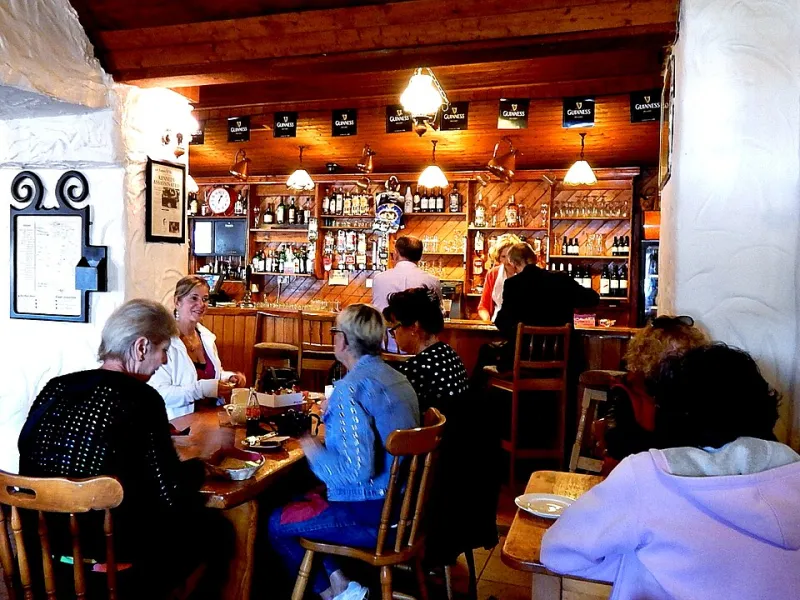
Photo: Dudley Council from England, CC BY 2.0, via Wikimedia Commons
There is a moment near the end of every gig when you can feel the room decide. It is not the first song. It is not the second chorus of the hit that nobody expected you to have. It is the final 20 minutes. At Freddie & The Freeloaders we have spent 2026 learning this the hard way: by playing venues where the last 20 minutes went brilliantly, and by playing venues where the last 20 minutes went down like a warm pint of mild.
The Room Has a Battery
A crowd is not a light switch. It is a battery. The first half of a set charges it. The middle tests it. The final 20 minutes decide whether you leave with a full charge or a flashing red light. In 2026 we have played a 180-capacity room above a pub in Leeds, a converted working men's club in Cardiff and a taproom in Bristol where the stage was technically a beer crate. The pattern was always the same. The gigs people talked about afterwards were not the ones with the best sound. They were the ones that nailed the ending.
Setlist Pacing Is Not a Spreadsheet
There is a temptation, when you are a band with a new record and a point to prove, to treat the setlist like a spreadsheet. Fast song, slow song, new song, old song, big finish. That is fine on paper. On stage, it is like serving a Sunday roast in courses that alternate between gravy and ice cream. The final 20 minutes need a shape. We have found that the best shape is not a straight line upwards. It is a curve: one last rowdy one, one moment of breathing space, then the closer. The breathing space is not a ballad. It is a reminder that the room is still with you. A thank you. A stupid story. A count-in that makes everyone lean forward.
The Encore Trap
Let us talk about the encore. The encore is a beautiful tradition and a terrible habit. The trap is thinking that leaving the stage and coming back is automatically a win. It is not. If the room is already spent, an encore is a chore. If the room is still buzzing, an encore is a gift. The difference is whether you have paced the final 20 minutes properly. We have seen bands play a six-song encore because they could not read the room. We have also seen bands play no encore and leave a crowd absolutely feral for more. The second option is braver and usually better. Promoters have told us the same thing: the best nights are the ones where the band could have played another 20 minutes but did not.
Crowd Fatigue Is Real
Crowd fatigue does not look like boredom. It looks like people checking their phones. It looks like the front row stepping back. It looks like a mosh pit that has become a gentle sway. It is not an insult. It is physics. People have been standing for two hours. They have had a pint. They have shouted themselves hoarse. The final 20 minutes have to work with that fatigue, not against it. That means trimming the self-indulgent instrumental. It means not doing the new song that nobody knows. It means giving the room one last chance to be rowdy rather than asking them to be patient.
Promoters Know the Truth
We spoke to grassroots promoters across the UK in 2026, mostly in the queue for the loo or over a very late chips. The consensus was clear: the final 20 minutes are where a gig becomes a story. A promoter in Glasgow told us that a band who finishes strong will sell merch, sell the next show and leave the venue staff smiling. A band who dribbles to a halt will do none of those things. Another promoter in Sheffield said the same thing in fewer words: finish like you mean it. That is not a marketing slogan. It is survival.
Practical Takeaways for Bands
First, know your last three songs before you walk on stage. Not the order. The feeling. Second, cut one song from the set. The one you are clinging to because it was fun to write. You will not miss it. Third, do not announce the encore. Just leave and come back if it is right. Fourth, watch the front row in the last 20 minutes. If they are still with you, give them everything. If they are flagging, give them a reason to stay. Fifth, finish on time. The venue has a curfew, the staff have a bus to catch and the crowd has a pint to buy.
Practical Takeaways for Fans
The final 20 minutes are not the time to go to the bar. We know the queue is shorter. We know you are thirsty. But the band can see you. The rowdy bit is happening. Stay for it. If you must leave early, leave between songs, not during the closer. And if the band finishes and the room is still buzzing, do not immediately put your coat on. That is the moment for the post-gig pint, the post-mortem and the argument about whether the encore was necessary. That is the night. That is the whole point.
Leave Them Wanting One More Pint
The 20-minute rule is not about playing longer. It is about leaving a room wanting one more riff and one more pint. In 2026 we have learned that a gig is not judged by how hard you played. It is judged by how hard it is to leave. If the last 20 minutes are right, the crowd will spill out into the street and into the nearest pub with the same energy. If they are wrong, they will be in a taxi before the lights go up. We know which one we want. We know which one you want. Now we just have to remember it when the adrenaline is pumping and the bar is calling.