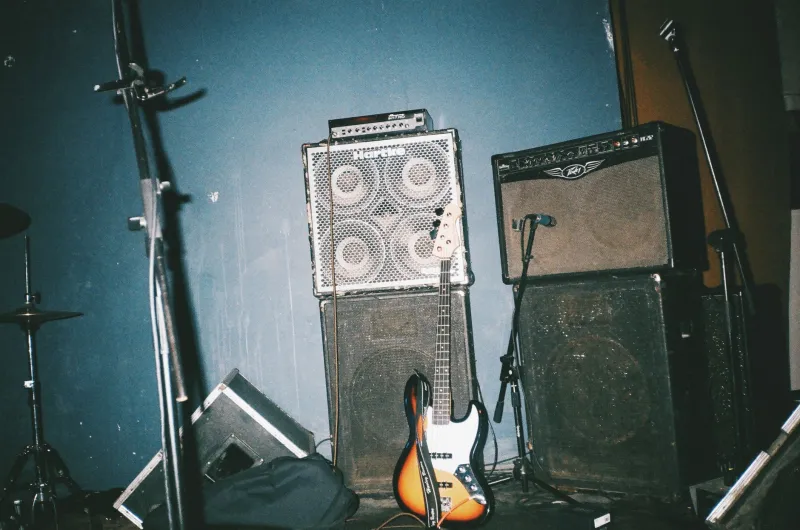
The Broken String Show: Making a Mid-Set Disaster Look Deliberate

There is a particular sound that stops a rowdy pub gig dead. It is not the landlord shouting last orders. It is not the drummer dropping a stick. It is the bright, brittle ping of a guitar string giving up halfway through the chorus, followed by the horrible silence of forty people wondering whether they are allowed to keep drinking.
String breaks are not a sign that the rock gods hate you. They are a sign that you have been playing guitar in a pub, possibly with the same set of strings since the last bank holiday. The real test is not whether your E string snaps. It is whether you can turn the next ninety seconds into something the crowd will talk about instead of something the landlord will add to your tab.
First Thirty Seconds: Do Not Apologise, Announce
The instinct is to freeze, stare at the headstock and mutter sorry into the monitor. Resist it. A silent band looks like a broken band. A band that acknowledges the chaos looks like a band that has done this before, even if the only thing you have done before is spill a pint on your own pedalboard.
Mute the guitar. Keep the drummer going if they can. Then say something. Anything. That, ladies and gentlemen, is the string equivalent of last orders. Or: Normal service will resume once I have performed emergency surgery on this plank. The goal is not a polished stand-up set. The goal is to buy yourself ninety seconds without the room turning into a queue for the door.
Do not blame the sound engineer. Do not blame the string manufacturer. Do not kick the amp, especially if it is a borrowed amp. The landlord is watching, the bar staff are watching, and the bloke in the corner who has been asking for Wonderwall all night is watching. Calm hands, cheerful face, get on with it.
Triage Like a Road Dog, Not a Tourist
A broken string is a triage problem. If it is the high E and you can finish the song on five strings, do that. Nobody paid to hear you tune. If it is the low E and the next riff depends on it, swap guitars or reach for the spare. If you have no spare guitar, this is the moment you learn why every road dog carries a pre-cut set of strings, a peg winder and a tuner that does not live in a rucksack at the bottom of the van.
The same logic applies when it is not a string at all. A blown valve, a dead cable, a pedal that has decided to retire mid-set: the crowd does not care about the technical name. They care about whether the noise comes back. Have a backup plan. A spare cable is cheap. A spare amp is not, but a borrowed one from the other band is cheaper than a ruined night, provided you ask before you unplug it. Do not raid the support band's pedalboard like a seagull at a chip shop.
Keep a small break kit on stage: strings, snips, winder, gaffer tape, a spare battery or two and a bar towel that has not been used to mop up something unspeakable. Label it. Put it where you can reach it without climbing over the drum riser. The road dog ritual is boring and unglamorous, which is exactly why it works.
The Banter Fill: Three Lines That Buy You Two Minutes
You do not need to be funny. You need to be audible and not annoying. A few reliable lines will do more than a panicked monologue about your string tension preferences.
This next one is in the key of shopping trolley.
While I sort this out, please enjoy the drummer, who has been waiting all night for a solo.
If anyone has a spare string, a spare guitar or a spare career, see me at the bar.
Say one, get the laugh, then get back to work. Do not turn the break into a ten-minute therapy session. The room will forgive a snapped string. It will not forgive a band that treats a pub gig like a podcast.
Give the Room a Job: The Singalong Diversion
A crowd with nothing to do becomes a crowd checking its watches. A crowd with a job becomes part of the show. If the break is going to take longer than a quick swap, teach them a chorus. Split the room. Ask the left side to sing one line and the right side to answer. If you can unplug and step forward, do it. If you cannot, let the drummer keep a groove going and turn the whole thing into a shambolic pub choir.
The trick is to choose something everyone can manage after two pints. Do not pick a deep cut from your second album that nobody has heard, including you. Pick a chorus with three words and a lot of shouting. If they sing badly, brilliant. If they sing well, even better. Either way, they are no longer staring at your broken string like it is a medical emergency.
What Not to Do When the String Goes
Do not keep playing with a broken string and flail at the remaining five like a man swatting wasps. It sounds awful and it makes you look like you are losing a fight with your own instrument. Do not spend five minutes tuning in total silence while the crowd slowly remembers they have homes to go to. Do not blame the pub, the damp, the phase of the moon or the fact that the stage is next to a radiator.
And do not, under any circumstances, borrow the support band's guitar without asking. That is not road dog behaviour. That is how you end up blacklisted from a pub that does a very good Sunday roast.
The Comeback Song Matters
When the string is changed and the amp is back, do not launch into the most complicated thing in your set. Pick a song the band can play in its sleep. A big, stupid, crowd-friendly riff is your friend. Count it in properly. Hit it hard. Win the room back before anyone has time to remember that the last three minutes involved a grown adult wrestling with a peg winder.
If the break happens near the end, you have been handed a gift. Finish on something short and loud, thank the crowd for their patience, and get off before the momentum dies. A mid-set disaster handled well can feel more memorable than a flawless run-through. Nobody goes home talking about the gig where everything went right. They go home talking about the night the guitarist's string exploded and the whole pub ended up singing the chorus while he swore quietly into a bar towel.
That is the road dog mindset. Weekend warriors panic. Road dogs rehearse the panic. Practise a string change at home. Time yourself. Have the spare cable where you can see it. Then, when the ping comes, you can smile, announce the emergency, and make the broken string look like part of the show.