Extra Time in the Public Bar: Gigging Around the Football Without Crying Into Your Setlist
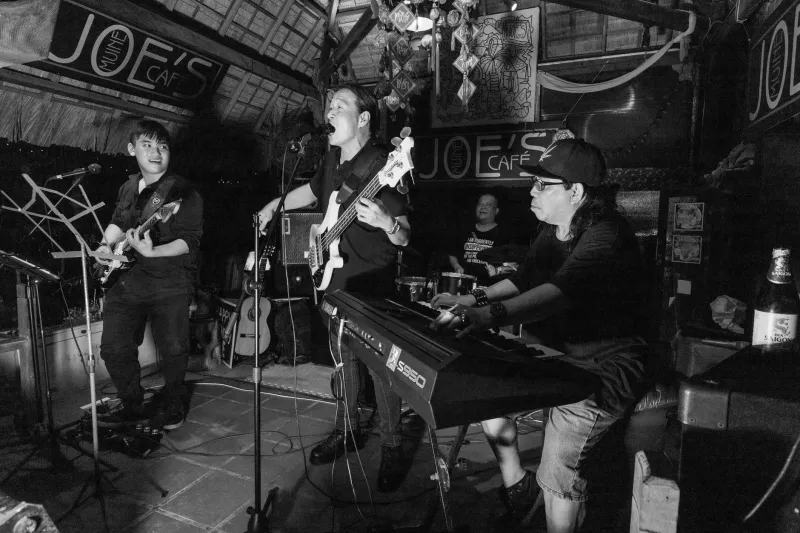
There is a particular kind of silence that falls over a pub when the landlord tests the projector on a Saturday afternoon. It is not real silence. It is the sound of a band realising they are about to become the warm-up act for twenty-two blokes and a VAR monitor. You have loaded in, tuned up, and now the big screen is showing a pre-match montage of headers, tears and a man in a coat saying 'massive game'. Your gig is still happening. It has simply been reclassified as a fixture in the sporting calendar, and you are not the main event.
Match-day pub gigs are not a write-off. They can be brilliant: a room full of people already in a good mood, a landlord who sells twice as much beer, and a crowd who will cheer anything if the football has gone their way. But they reward a different set of skills. You are no longer asking, 'What do these people want to hear?' You are asking, 'What can these people hear, and when?' Here is the field guide we wish we had before we played a 3pm kick-off to a bar full of blokes watching a penalty shootout on a screen the size of a garage door.
First Whistle: Nail the Kick-Off Before You Nail the Fee
Before you discuss money, discuss minutes. A match-day gig lives or dies on scheduling. Ask the landlord three questions: which match, what time is kick-off, and will the sound be on? A 12:30 kick-off means you can play a lunchtime set to the pre-match crowd, then vanish before the first corner. A 3pm kick-off means you should be off stage by 2:30 or on after 5:15. A 5:30 kick-off is the awkward one: you are either the aperitif or the after-dinner mint, not the main course. If the landlord shrugs and says, 'We'll see how it goes,' translate that as: 'You will play to a wall of backs and then I will ask why nobody danced.' Get the timings agreed by text. Offer a split shift: forty-five minutes before the match, forty-five after. It gives the pub music when it wants it and gives you a fighting chance of an audience with faces rather than shoulder blades.
Also, agree where the screen is. If it is in the main bar and you are in the corner, accept that your set is now a soundtrack. If there is a back room, ask to play there. If the screen is in the same room, angle your amp away from the screen and towards the people. And do your load-in quietly. Carrying a bass cab through a tense 0-0 is not the moment to demonstrate your wheelie-case technique. Set up like a man defusing a bomb.
Reading the Room: The 4-4-2 of Match-Day Crowds
A pub crowd on match day has formations. There are the early pinters, who arrived at noon and are now emotionally invested in a fixture they cannot pronounce. There are the scarf wearers, who will sing whether or not the band is playing. There are the lads who have been in the beer garden since opening time and are now a health-and-safety risk. And there are the neutrals, who just wanted a quiet pint and a bag of scampi fries and have accidentally wandered into a public order situation.
During the match, attention is not on you. That is fine. Your job is to fill the gaps: the adverts, the half-time lull, the post-match decompression. Build a set that works in ten-minute blocks, not a 45-minute prog odyssey. Short songs. Familiar choruses. A cover or two that people can sing without knowing the words. Do not start a slow, sensitive number at 3:01pm unless you enjoy the sight of a hundred people looking through you towards a corner flag.
Watch the eyes. If heads turn to the screen, you are background music; play accordingly. If heads turn to you, you have a room. If a goal goes in, stop. Do not compete with a roar. You will lose. Wait for the celebration to peak, then play a short, sharp riff as the crowd settles. If it is a defeat, do not play 'Happy' by Pharrell Williams. That is not a gig strategy; that is a cry for help.
Half-Time: The Surge, the Queue and the Two-Song Rule
Half-time is your window. It is fifteen minutes of pints, pies, toilet queues and tactical analysis from people who have never kicked a ball. The crowd is moving, which means they are also passing you. This is the moment for a short, punchy set, not a new direction in your artistic journey. Announce the plan: 'We've got time for two before the second half, then we're back after full-time.' It manages expectations and makes you sound like you know what you are doing, even if you don't.
Do not start a song at 3:47pm if the second half starts at 3:50pm. Do not start a song at all if the queue for the bar is still ten deep and the landlord is giving you the look. A good half-time set is like a good substitution: brief, effective and unlikely to be remembered in detail. If the crowd starts singing football chants, do not fight it. Join in, or at least smile. You are not competing with the tribal songbook. You are the support act to a tradition.
Full-Time: The Emotional Weather System
Full-time is a weather system. A win brings joy, a defeat brings despair, and a draw brings a kind of existential silence that no encore can fix. Give it five minutes. Let the final whistle, the groans, the cheers and the post-match phone calls settle. Then read the room again. If they are happy, play something upbeat and familiar. If they are miserable, play something upbeat and familiar. If they are furious, play something upbeat and familiar, but keep your head down.
This is also the moment when the landlord may turn the sound down or off. Do not take it personally. The pub has two revenue streams fighting for the same space: the match and the music. Your job is to make both work, not to win a turf war. If a penalty shootout starts, surrender the room. There is no shame in being the support act to a match. There is shame in playing a twelve-minute blues number while a grown man weeps into his pint.
Volume, Silence and the Art of Surrender
Match-day volume is a negotiation. If the crowd is loud and happy, match their energy, but remember you are in a pub, not a stadium. Cranking the amp to eleven does not make people listen; it makes them leave. If the match is tense, go quieter or stop. Silence is a valid part of a set. Use it. A band that knows when not to play is more employable than a band that treats every gap like a personal insult.
Have a 'break glass' song: a riff or chorus that can pull a room back if it drifts. Have a 'match-day set' that can be cut from forty-five minutes to twenty without anyone noticing. And have the humility to surrender. If the landlord signals, if the screen goes to extra time, if the crowd is clearly not there for you, stop. Thank them. Pack up quietly. You have not failed. You have been beaten by the fixture list, which is a noble way to lose.
The Load-Out: Leave Like a Draw
Do not pack up noisily during the match. Wait for full-time, or use the back door. Thank the landlord for the gig and for the timing. If you can, book another date then and there. Say something like, 'We know when we're beaten by the fixture list. Give us a non-match Saturday and we'll bring the noise.' It shows you understand the pub's business, which is more than most bands manage after their third pint.
A match-day gig is not about winning the room. It is about avoiding relegation. You may play to twelve people and a dog in a football shirt, but if the landlord is happy, the beer is flowing, and nobody got hurt, you have done the job. You are not the headliner. You are the interval. And the interval, done well, is what gets you invited back.