The Extension Lead Veto: Pub Songs That Win a Return Booking
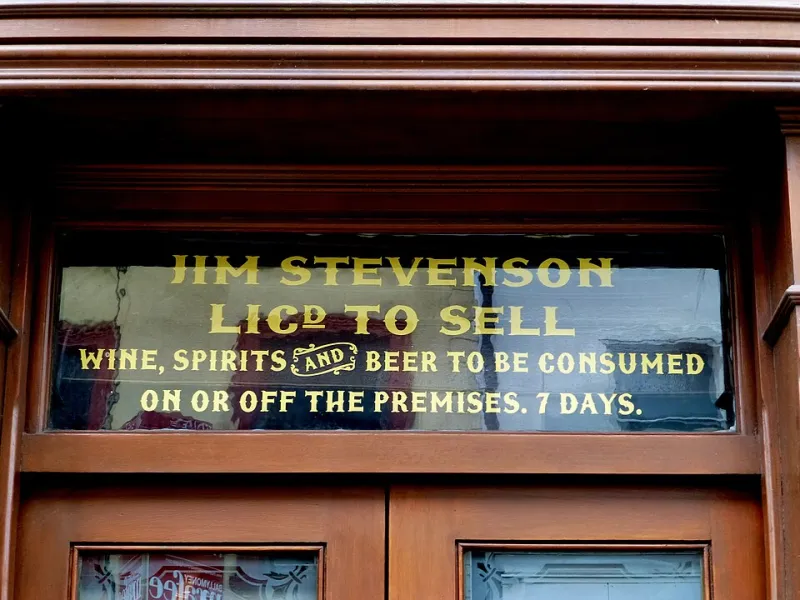
Photo: Kenneth Allen , CC BY-SA 2.0, via Wikimedia Commons
Every pub gig starts with a negotiation, and the most important person in the room is rarely the one with the guitar. It is the landlord, stood by the fuse box with one eyebrow raised and a mental list of every deposit they have ever lost to a flying pint. You can have the best riffs in the county, but if the person holding the extension lead decides your set is a risk to the fixtures, you will be packing up before the encore.
This is not about watering down the show. It is about understanding what a pub actually needs from a band: a room that stays full, a bar that keeps moving, staff who are not mopping up someone else's chaos by 10.15pm, and a clear ending that does not merge into a lock-in nobody planned. In 2026, with pub margins tighter than a snare drum, that matters more than ever.
The person holding the plug is the real headliner
Talk to landlords across the UK and the same themes come back. They are not anti-volume. They are anti-surprise. A loud band is fine if the landlord knows it is coming and the room is built for it. A loud band that suddenly launches into a tempo change designed to make people collide is a different conversation entirely.
One landlord in the Midlands put it neatly: 'I do not mind a rowdy night. I mind a rowdy night I did not agree to.' That is the whole doctrine in one sentence. The setlist is not just a musical document; it is a risk assessment with chord changes. A good pub band makes the landlord feel like a co-promoter rather than a fire warden.
Songs that fill the till without filling the mop bucket
The safest pub set is not a collection of gentle songs. It is a collection of songs with a clear shape. Landlords tend to favour tunes that get people singing, swaying or tapping the bar, but do not immediately invite human projectile motion. Familiar mid-tempo numbers are gold. So are songs with a big, repeatable chorus and a finish that everyone recognises.
A practical order might look like this: two recognisable warmers to pull people away from the fruit machine, one original with a chorus simple enough to catch by the second pass, a mid-set singalong that gets the bar queue moving, a slight reset to let the staff catch up, and a closer with a definite, unmistakable ending. The landlord does not care whether the song was written by you or by a platinum-selling stadium act. They care whether the room stays in the building.
Originals are not the enemy, either. The trick is placement. Do not stack three unfamiliar songs in a row and hope the crowd develops patience. Put an original next to a cover that shares its tempo or mood, and give people something to latch onto. A chorus they can bellow is worth more than a clever bridge they cannot follow after two pints.
The red-flag songs
Some songs are not banned, but they are flags on the play. The obvious ones are the shout-along anthems that turn a pub floor into a contact sport: 'Killing in the Name', 'Song 2', 'Seven Nation Army', 'Ace of Spades', 'Mr Brightside'. None of these are inherently bad. They are, however, songs that can spark a pit, a volume war or a sudden desire for someone to climb the radiator.
There is also the acoustic-guitar trap. 'Wonderwall' has launched a thousand singalongs and at least as many arguments about who gets to play it. 'Sweet Caroline' can unite a room or make it feel like a wedding reception that has run out of buffet. The point is not to avoid every well-known song. The point is to ask the landlord, before the gig, whether they are happy with the rowdy end of your setlist.
Red flags also include originals with long quiet passages in the middle of a peak-time set. It is not artistic cowardice to notice that the bar has emptied. A pub is not a concert hall with a captive audience. If the till stops, the landlord starts looking at the plug.
The five-minute chat that saves the night
Before you load in, have a short, sober conversation with the person in charge. Not a rambling artist statement. A practical checklist.
- Confirm the volume ceiling and who is allowed to signal when it is too much.
- Ask about glassware. If the pub uses real glass, agree a no-pit, no-crowd-surf policy before the first note.
- Check the curfew and how it relates to last orders. A hard stop is easier to honour than a hopeful fade.
- Flag any song likely to cause a surge, a shout-off or a mosh pit. Let the landlord veto or approve it.
- Give bar staff a heads-up about dedications, requests and anything that might cause a queue spike.
- Confirm the load-out route. Nobody wants to discover the fire exit is blocked by a bass cab at midnight.
- Agree a plug-pulling protocol. If the landlord needs the music off, what signal will they use? A raised hand is better than a passive-aggressive flicker of the lights.
The setlist is a contract
A pub set works best when both sides know what they are getting. The band brings the rowdiness; the landlord brings the room, the licence and the extension lead. If you want to be invited back, treat that lead like a handshake. Play the songs that fill the room without emptying the glass rack. Save the chaos for the moments you have cleared in advance. And always, always finish on time.
That is not selling out. That is booking in again.